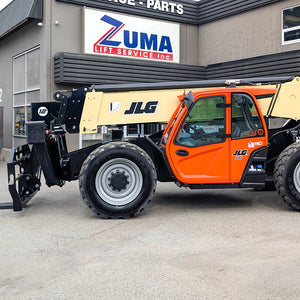
Telehandler
Easy Delivery

Industry-Standard Equipment

Looking to buy a telehandler? Zuma has you covered. We have a wide selection of new and used telehandlers for sale. We are a telehandler dealer for the best brands like Genie, JLG, Skyjack and more. All our telehandlers come with flexible financing solutions as well as easy delivery options across North America.
Don't see the telehandler you need? No problem. We have access to much more than we have listed. Call our expert team today: 1-877-225-6003


Why Trust This Guide? | Verified by the Zuma Sales Team
This Telehandler Buyer’s Guide is curated and verified by the Zuma Sales Team, reflecting 20+ years of combined experience in aerial lift equipment sales, certified operation, and maintenance.
All technical information is based on hands-on expertise and fact-checked to meet ANSI standards
Our recommendations are informed by servicing thousands of lifts and helping 10,000+ customers find the right machine for their job.
Your Complete Telehandler Buyer’s Guide
Buying a telehandler is a big investment, and with so many makes, models, and features available, it can be tough to know where to start. We’ll tell you right off the bat that it’s important to understand more than just the specs themselves, but you also need to know how each option fits into the real work you’re doing.
In this guide, we’ll walk you through the essentials of choosing a telehandler. You’ll also get insights on how to compare brands, weigh the pros and cons of buying versus renting, and much more to add to your knowledge.
By the end, you’ll have a clear picture of what to look for and the confidence to make a smart, informed decision.
What Is a Telehandler and How Is It Used?
A telehandler is also known as a telescopic handler or a telehandler forklift, given its features that combine the functions of a forklift and a crane. You can think of it as a forklift that can reach higher and farther; unlike traditional forklifts, it can extend both upwards and forward
A telehandler machine excels in its versatility due to its multi-purpose design, where traditional forklifts fall short. They can take on tasks in construction, agriculture, and other settings because of their compatibility with a wide range of attachments.
Let's explore how different industries utilize telehandler lifts in their day-to-day operations.
Telehandler Use Cases: Construction, Agriculture & Industry
Telehandlers are the top choice of true multi-taskers. Their adaptability allows them to tackle jobs that would otherwise require different types of equipment, which proves their cost-effectiveness and efficiency for businesses.
The table below is just a peek at specific ways how telehandler machines are utilized in construction, agriculture, and across industrial settings:
| Industry | Primary Applications | Key Benefits | Typical Attachments |
|---|---|---|---|
| Construction |
|
|
|
| Agriculture |
|
|
|
| Warehousing |
|
|
|
| Landscaping |
|
|
|
| Manufacturing |
|
|
|
| Mining/Quarrying |
|
|
|
Construction and agriculture represent the largest markets in need of telehandler equipment.
- A construction telehandler helps engineering projects lift and place heavy materials safely on elevated areas.
- Agricultural telehandlers, on the other hand, help farmers heavily with tasks like hay handling and, most importantly, barn maintenance.
These sectors alone demonstrate the importance of their role in maintaining efficient, versatile, and productive operations, even in other sectors.
Top Telehandler Brands Available at Zuma Sales
Brands play an important role in ensuring you get long-term value with the equipment you're getting. At Zuma Sales, we’ve done the hard work for you, so you don’t have to waste time on trial and error with brands that fall short, lack credibility, or cause costly headaches down the line.
We only partner with manufacturers we know and trust—brands that are proven, reputable, and built to last. Below, we feature two of the top telehandler brands we confidently recommend.
JLG Telehandlers
JLG telehandlers are renowned for their strength, durability, and advanced technology. JLG models are favored in construction projects due to their stable handling and long reach. However, like any brand, there are pros and cons to consider too.
It's helpful to look at both the strengths that make them stand out and know any potential downsides in advance so you can set clear and realistic expectations before making a purchase.
| Pros | Cons |
|---|---|
| Advanced safety systems and operator protection | More expensive than other brands |
| Wide support and parts availability | Complex electronic systems & may require specialized technicians for repair |
| Smoother operation with its advanced hydraulic systems | Unnecessary premium features for basic use |
| Strong resale value and brand recognition | Limited budget-friendly options in compact sizes range |
| Comprehensive attachment compatibility | Higher fuel consumption in older models |
To compare models together with their specs, feel free to browse our JLG telehandler for sale collections.
Genie Telehandlers
Suppose you prefer more practical equipment and are looking for a user-friendly operation that is dependable for both experienced and new operators. Genie telehandlers emphasize simplicity in operations without compromising quality.
| Pros | Cons |
|---|---|
| User-friendly controls | Smaller dealer network compared to some competitors |
| Competitive pricing with solid build quality | Some parts may be more difficult to find |
| Reliable mechanical systems with proven durability | Fewer advanced technology features in base models |
| Good fuel efficiency across model ranges | Some models have lower lift capacities |
| Strong warranty coverage and support | Attachment selection may be more limited |
Compare Telehandlers by Size & Lift Capacity
The size of a telehandler is defined by the amount of weight it can lift, and this directly affects how well it performs on the job. If the machine is too small for the tasks at hand, it slows down progress and reduces efficiency. If the machine is too large for the site, it wastes fuel and becomes difficult to maneuver in limited spaces.
The end goal of choosing the right model should help you avoid both extremes and ensure that your telehandler supports, rather than hinders, productivity.
Compact & 6K–9K Telehandlers
Compact telehandlers are engineered for job sites where space is limited and tight navigation is required. A 6k telehandler and a 9k telehandler are commonly preferred for their ability to combine the strengths of smaller models and enough lifting capacity for sectors where they are most needed. Assess your job site in terms of overhead clearance restrictions, and what typical height and width would suffice to ensure efficiency of the equipment before purchase.
Even though these telehandlers are smaller in size, they maneuver smoothly in narrow aisles compared to other sizes. It is advised to always follow OSHA's Aerial Lift Standards to prevent overloading and maintain safe practices during daily operations.
Below is a detailed look at what makes these compact telehandler models so effective on certain job sites.
| Specification | 6K Telehandler | 9K Telehandler |
|---|---|---|
| Max Lift Capacity | 6,000 lbs | 9,000 lbs |
| Max Lift Height | 19-25 ft | 25-32 ft |
| Max Forward Reach | 12-16 ft | 16-20 ft |
| Operating Weight Capacity | 12,000-16,000 lbs | 16,000-22,000 lbs |
| Engine Power | 75-100 HP | 100-125 HP |
| Applications |
Warehousing Small constructions Building maintenance |
Agriculture Medium constructions Loading docks Material placement |
Heavy-Duty 12K–20K Telehandlers
Heavy-duty telehandlers are designed to deliver maximum power and reach when lifting heavy materials on larger-scale projects. A 12k telehandler, 15k telehandler, and 20k telehandler are built to manage loads that smaller machines cannot handle.
These models are specifically equipped to handle rough terrain and open job sites. They are purpose-built for high-demand environments and typically come with enclosed cabs and climate control features for operator comfort in various working conditions.
The table below shows complete information you need to know about these heavy-duty telehandlers:
| Specification | 12K Models | 15K Models | 20K Models |
|---|---|---|---|
| Max Lift Capacity | 12,000 lbs | 15,000 lbs | 20,000 lbs |
| Max Lift Height | 32-42 ft | 42-55 ft | 55-80 ft |
| Max Forward Reach | 24-30 ft | 30-40 ft | 40-55 ft |
| Operating Weight | 25,000-35,000 lbs | 35,000-45,000 lbs | 45,000-65,000 lbs |
| Engine Power | 100-140 HP | 140-175 HP | 175-275 HP |
| Applications |
Heavy construction Industrial facilities Steel placement |
High-rise construction Precast concrete Bridge works |
Mining operations Large infrastructures Hardware stores |
Specialized Telehandler Options
Some businesses find that even after purchasing a telehandler they thought was perfect for the job, something still feels missing or isn’t right. These are the machines that are built to handle specific operations that conventional models might struggle with or simply cannot perform.
In this section, we’ll highlight two of the more unusual telehandler categories that both bring specialized features and functions in their own ways. Let’s explore how you can benefit from these underestimated specialized telehandlers:
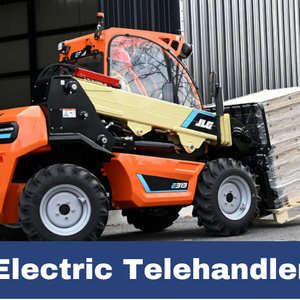
Electric Telehandlers
Electric telehandler models stand out because they can work without emissions while providing quiet and efficient operation.
These electric models help in reducing costs on fuel expenses and, most importantly, they help lower the carbon footprint of projects for their entire duration. This is basically ideal anywhere where air quality is of the utmost importance.
Key specifications and applications for electric telehandlers are found in the table below:
| Specification | Details | Key Advantage |
|---|---|---|
| Rotation Range | 360° continuous rotation | No repositioning - stay in one spot |
| Load Capacity | 6,000-12,000 lbs | Full lifting power while rotating |
| Height Outreach | 25-45 ft | Access multiple floors from a single position |
| Stabilization | Auto-deploy outriggers | Enhanced stability on uneven ground |
| Primary Applications |
|
Perfect for confined spaces and precision work |
Technically, rotating telehandlers use specialized rotary joints and advanced stability controls to maintain safety during boom rotation. This allows for smooth and secure operation even while handling heavy materials in tricky positions.
If your job demands precise and flexible lifting, rotating telehandlers are an excellent choice.
Tracked Telehandlers
Common telehandlers mentioned in the sections above would struggle and often get stuck if your common job site projects include rough, muddy, or uneven terrains.
The track system of a tracked telehandler has great capability in distributing weight more evenly. This helps in reducing ground pressure while providing superior traction on soft, uneven, or even slippery surfaces.
Even though the top speeds of these specialized telehandlers are lower, they make up for features like optional dozer blades for grading and hydrostatic drives to maintain the smoothness of their mobility, hence giving the operator more precise control.
The table below consists of key specifications and applications for tracked telehandlers:
| Specification | Details | Key Advantage |
|---|---|---|
| Track System | Rubber tracks with 4-8 PSI ground pressure | Won't damage lawns or leave ruts |
| Terrain Capability | Operates on 30-45% slopes in all weather conditions | Works where wheeled equipment can't go |
| Load Capacity | 6,000-15,000 lbs | Full lifting power on difficult terrain |
| Flotation | Superior weight distribution | Access to remote and sensitive locations |
| Primary Applications |
|
Ideal for soft ground and environmental protection |
Tracked telehandlers may cost you more, but their ability to access challenging locations and operate year-round in all weather conditions safely and efficiently justifies the investment for businesses operating in job sites with diverse terrain conditions.
Buy or Rent a Telehandler — What’s Best for You?
One of the first decisions businesses struggle to make is whether to invest in purchasing a telehandler or stick with renting. Each option has its benefits depending on your project duration, usage patterns, and financial situation.
To help you weigh your options, let’s compare the key points of buying versus renting a telehandler.
Buying a Telehandler
If you're running ongoing projects or plan to use the equipment regularly, choosing to buy a telehandler can bring long-term value, plus ownership can give you complete control over the equipment availability, modifications you want with the equipment, and maintenance schedules.
For companies with frequent and ongoing projects, buying a telehandler is often the most cost-effective and practical choice. Here’s a look at the pros and cons of buying:
| Pros | Cons |
|---|---|
| Lower long-term costs compared to repeated rentals | Higher upfront capital investment |
| Equipment becomes a business asset with resale value | Owning the responsibility for all maintenance and repair costs |
| 24/7 availability without the need to schedule | Equipment value depreciation reduces asset value over time |
| Freedom to customize attachments | Potential obsolescence as technology advances |
| Tax benefits through depreciation deductions | Storage and insurance costs when not in use |
| No more rental overtime charges | Tied to one machine, which means no flexibility to try different models |
Buying is the most practical decision for businesses with consistent and high-hour usage, as it turns equipment into a revenue-generating asset.
Renting a Telehandler
Businesses are most attracted to renting telehandlers due to their lower initial costs, especially when capital availability is limited. This approach is more practical than purchasing for businesses with one-off work and seasonal operations.
If you’d rather avoid ownership responsibilities such as storage, maintenance, and major repairs, renting will help keep your attention fully on the job.
However, it’s important to keep in mind that rental fees can add up over time, sometimes it takes a year of renting before realizing that the total cost of rental fees you’ve spent for the whole year amounts to the same price as purchasing a brand new model.
See the table below to see the pros and cons of renting a telehandler:
| Pros | Cons |
|---|---|
| Lower upfront cost compared to purchasing | Rental fees add up over time and may equal the purchase price |
| No long-term storage or maintenance responsibilities | Limited attachment options or features |
| Access to newer models with the latest technology | Availability may be restricted during peak demand |
| Flexibility to scale equipment use as projects require | Equipment may be unfamiliar to operators and may require extra training |
| Ideal for short-term or seasonal projects | No asset ownership, resale value, or equity built, just an added expense shouldered by the business |
| Repairs and servicing are often covered by the rental company | Potential delays due to scheduling or delivery logistics |
While we don’t currently offer telehandler rentals at Zuma Sales, we’re committed to guiding decision-makers toward the smartest choices for their needs and ensuring they always have the right equipment strategy in place.
Looking for a Used Telehandler?
If budget is a concern, consider another option to purchase a used telehandler for sale listed in the market. Each used telehandler in our inventory is carefully inspected to ensure it meets safety and performance standards prior to listing.
We also offer financing and limited warranty options, giving you the peace of mind when purchasing a used machine.
Explore our current used telehandlers available across the U.S. to see the full specs.
Nationwide Shipping & Delivery
Location should never be a barrier to getting the quality equipment that you need. We offer nationwide shipping and delivery services to get your telehandler to your job site quickly and efficiently, no matter where you are in the U.S.
At Zuma Sales, we ensure your telehandler for sale near me search ends with reliable and fast delivery to your location. Our nationwide logistics network covers all 50 states in the US. Whether you are from Houston, Texas, or New York City, Zuma Sales can get it to you in no time.
Why Choose Zuma Sales for Your Telehandler Needs?
Choosing Zuma Sales means partnering with a team dedicated to your success. We don't just provide you with what you think you need at the time of purchase; we make sure you can rely on us pre- and post-purchase to the best of our abilities.
Here’s why Zuma Sales should be your top choice among all telehandler suppliers and dealers in the market:
- Expert guidance: Our specialists help you choose the right equipment for your project, so you never waste time and money on the wrong equipment.
- 24/7 support: We’re always available online to assist whenever you need help with your equipment.
- Flexible financing: We offer simple, transparent financing options with no hidden fees for both new and used equipment.
- Trusted brands: We only partner with leading manufacturers known for reliability and performance in the aerial lift market.
- Nationwide delivery: We provide fast delivery and responsive service to keep your operations running without delay. Wherever you are in the US.
Ready to move forward? Contact us today and request a customized quote tailored to your specific telehandler needs.
Telehandler FAQs
A telehandler forklift is a multi-purpose lift equipment with a telescopic boom. It has the capabilities of a forklift and those of a crane to handle massive loads flexibly.
Lift heights vary by model but can range from about 15 feet to over 50 feet, depending on the machine's engineering design.
Forklifts offer limited reach with a fixed mast, while telehandlers possess extendable booms for greater reach and height.
Top brands include JLG, Caterpillar, Genie, and Manitou, known for their reliability and service support.
Yes, especially compact telehandlers as they are specifically designed for tight spaces and with low exhaust emissions.
To safely operate a telehandler, you must ensure you've completed proper training, perform safety checks before use, and follow the manufacturer’s load capacity guidelines carefully.
Common attachments include buckets, pallet forks, jib cranes, winches, and work platforms.
Prices vary widely but generally range from $50,000 to over $150,000 depending on size, brand, and features.
Prices for used telehandlers may vary depending on their condition and the number of years they've been used, but the typical range starts at $44,000.
Yes, many models are designed with off-road capabilities and robust tires or tracks for rough environments.
Their telescopic boom and flexible attachments reduce the need for multiple machines and speed up material handling.
With proper maintenance, telehandlers can last 20 years or more, depending on usage and conditions.
With proper maintenance, telehandlers can last 10 years longer after purchase, depending on usage and conditions.
Lift capacity determines the maximum weight you can safely handle. Choosing the right capacity avoids accidents and damage.
Certification is often required for safety and insurance purposes, though rules vary by location and employer.